

An Interview with Kidu, Tommy & Poppy · Refugee Week 2025

“We met in this specific place… every Saturday morning.” Kidu fondly recalls, it was at the Saturday morning cafe in Kings House that his friendship with Tommy and Poppy began, bonding over games like Uno and Connect Four. “That’s how I met them, this lovely couple of beautiful people.”
Tommy’s first impression of Kidu was his “relentless positivity.” He remembers, “Like I remember you coming into the cafe, like, super smiley, super easy to engage with, very positive. Even when you were talking about hard stuff, you were just like, you brought a real positivity to the space with a real kind of joy that was slightly infectious.” Poppy reflects on Kidu’s remarkable ability to connect with others. “He’s someone who makes connections really quickly. You arrived in London in a difficult situation, but a whole network sprang up around you… because of how friendly and joyful you are.” Kidu jokingly describes Tommy and Poppy as “super cool,” while this set off affectionate laughter from everyone, but he quickly added, “They are kind… most importantly, they are kind.”
Kidu arrived in London from Ethiopia nearly three years ago. Once an auditor, he has since fully immersed himself in music, playing drums and bass, and teaching as well. However, settling into his new life wasn’t easy. “It was a tough time because I’d never been in that kind of situation before in my life, I didn’t realise how it would be, like having someone you never knew, you never met, to step into your life… do you know how scary that is?… [but] because of these guys, because of you, all of you, it got better… day by day.”
Their relationship has grown from one of support to a true friendship. Reflecting on how their relationship has changed over the years, Kidu says, “For the better yes… At the beginning I was just taking taking taking taking… and now, it’s just getting stronger, more [like] family, more [like] friends.” Tommy agrees, “you took us out for dinner, you took us for Ethiopian food… having you at our wedding was really special, like that was amazing… having you over for dinner, going out for dinner with you… yeah… feels more like family.” Kidu laughs and replies, “I told you!”

Hope runs deeply through their story. Poppy explains the importance of walking alongside people over time: “I get a lot of hope from seeing lives change when you know people over several years… there’s no formula.” Transformation isn’t a simple or predictable process; there are no quick fixes or answers. Their faith informs much more than just hope; it shapes how they live daily. Tommy reflects, “I think the whole narrative of the Bible, the whole narrative of Jesus is like a narrative of justice… a God who steps into the earth in all of its mess and decides that he wants to engage with the vulnerable, with the leper, with the poor, the marginalised… it’s this beautiful vision of someone with so much power giving that up for other people… I in my own limited way, am in a position of power… my faith calls me out of that, to serve.” Poppy summarises their shared belief: “There are lots of different ways to think about it, but for me, God calls us to love other people like he loves us.”
In Kidu’s words: “What gives hope in life, it’s all about sharing… it’s not about giving… you can never be successful unless you lift someone up.”

An Interview with Hamza & Jehan · Refugee Week 2025

Hamza’s first days in London were filled with fear and uncertainty. He had arrived from Yemen, and was afraid to walk down the street. “I read in the media that people in the UK didn’t like refugees. I thought British people would say, ‘This is an asylum seeker – let’s hit him’. I was very scared. I stayed inside for two weeks.”
Eventually, he heard about King’s House. Hamza joined weekly English classes, where he met Jehan, a KXC volunteer. “Hamza is always smiling,” says Jehan. “Not everyone is smiling around here, because many people have tough things going on. But despite the challenges he’s faced, he’s such a positive person. He brings so much warmth into this space.”
On Thursday nights, around 20 people gather for ESOL (English for Speakers of Other Languages). For Hamza, it’s a useful way to learn about British culture and customs, and also to build his confidence. “Now, I understand more,” he says. “I can speak with people and ask questions. My English is better than before.”
King’s House isn’t just a place for refugees and asylum seekers to learn practical skills. It’s also a place where friendships form, and community grows. “Before I came here, I didn’t know anyone,” Hamza recalls. “Now, I have friends from many countries. I have told new arrivals from my hostel to come here. I say, ‘You’ll find support. You won’t be alone’.”

Jehan and Hamza also hang out at KXC’s Saturday Cafe, where they chat during long games of Jenga. “It’s so nice when you see someone every couple of weeks,” says Jehan. “At first, you only know their name. Then you hear more of their story. You get a sense of their personality. You start having jokes, and the relationship grows from there.”
For Jehan, who has been part of the King’s House community for a year, volunteering is tied to his faith. “The Bible says a lot about welcoming the foreigner. That’s what we’re called to do. But it’s not difficult, because I get so much joy from spending time with people like Hamza.” “He told me that, in Arabic, his name means ‘lion’ and I can see his courage.”
Hamza recently received humanitarian protection in the UK, meaning he can stay here for five years. “I was confused at first, because it’s not permanent,” he explains, “but it means I can start to plan my life here. I want to go to college to improve my English, and do a master’s in accounting. And one day, I want to help others – refugees or homeless people – just like people helped me.”
To mark Refugee Week, Hamza has a message for all of us.
“Refugees and asylum seekers don’t come to the UK for fun,” he says. “Many have run away from war. Their countries are very dangerous, and life is very hard. Please don’t judge us. Listen to our stories. Then, you’ll know why we have come here.”

An Interview with Kevan, Binny & James · Refugee Week 2025

James, Kevan and Binny met nearly two years ago at the evening football sessions hosted at Calthorpe Community Gardens for refugees and asylum seekers. At the time, Binny and Kevan were newcomers to London, learning English, adjusting to life in a new country, and living in a hostel.
“I remember first meeting Kevan,” James says. “He seemed quiet and calm. Binny was always smiling, very friendly. We started playing football together, and then I could see how jokey and funny they were.” Kevan and Binny both came to the UK from Ethiopia and met each other shortly after arriving. “We met in the hostel,” Kevan explains. “We started a new life. Strong friendship now.” The two now work in construction- Binny started first, and Kevan followed a month later after finishing ESOL (English for Speakers of Other Languages) classes.
“Long days, hard work,” Binny admits, but there’s always something to look forward to, like football on Tuesdays. “I enjoy playing with you guys,” James says with a smile. “Kevan is great in defence, I trust him. You both have energy. I don’t defend unless I have to!”

Football is more than exercise. It’s a space to practice English, build confidence, and forge lasting friendships. “In ESOL, I was quiet,” Binny says. “In football, I talk too much. I like talking and practising English.” Kevan agrees, laughing: “I always ask the questions in ESOL, but didn’t say as many answers. That’s why my English is not so good.” Binny adds, “In football, sometimes you learn bad words too- with emotion” James jokes, “So bad words in football, good words in ESOL?” Both Binny and Kevan laugh and agree, “Yes!” Bini recalls: “I’ve played football since I was young, even in Ethiopia… now I work Monday to Saturday, and I look forward to playing every Tuesday. It’s very nice- two and a half or three years now with the same people and no fighting!”
From regular games to shared meals and birthdays, their friendship has deepened over time. “[Me and Bini] meet every Saturday at football, sometimes go for dinner, celebrate together, laugh together,” Kevan says. “And we do the same with James and Harry. It’s like family.” Bini adds: “My family isn’t here… but these friends are like my family. I’m so happy.” James reflects on their relationship over the years. “I’ve seen both of you become more confident. Bit by bit, more comfortable. Small changes, but they matter.”
Kevan remembers first seeing James lying on a sofa and thinking he was short, not realising he was just unwell and was six foot four. “I thought he was short!” he laughs. Binny remembers thinking Kevan was from another region because they couldn’t understand each other at first, only to find out later they shared the same language.
When asked what this community means to them, Binny answers simply: “I feel love.”
Kevan nods. “Me too. It’s very good. Very nice. I’m happy.”

An Interview with Sabira & Naiha · Refugee Week 2025
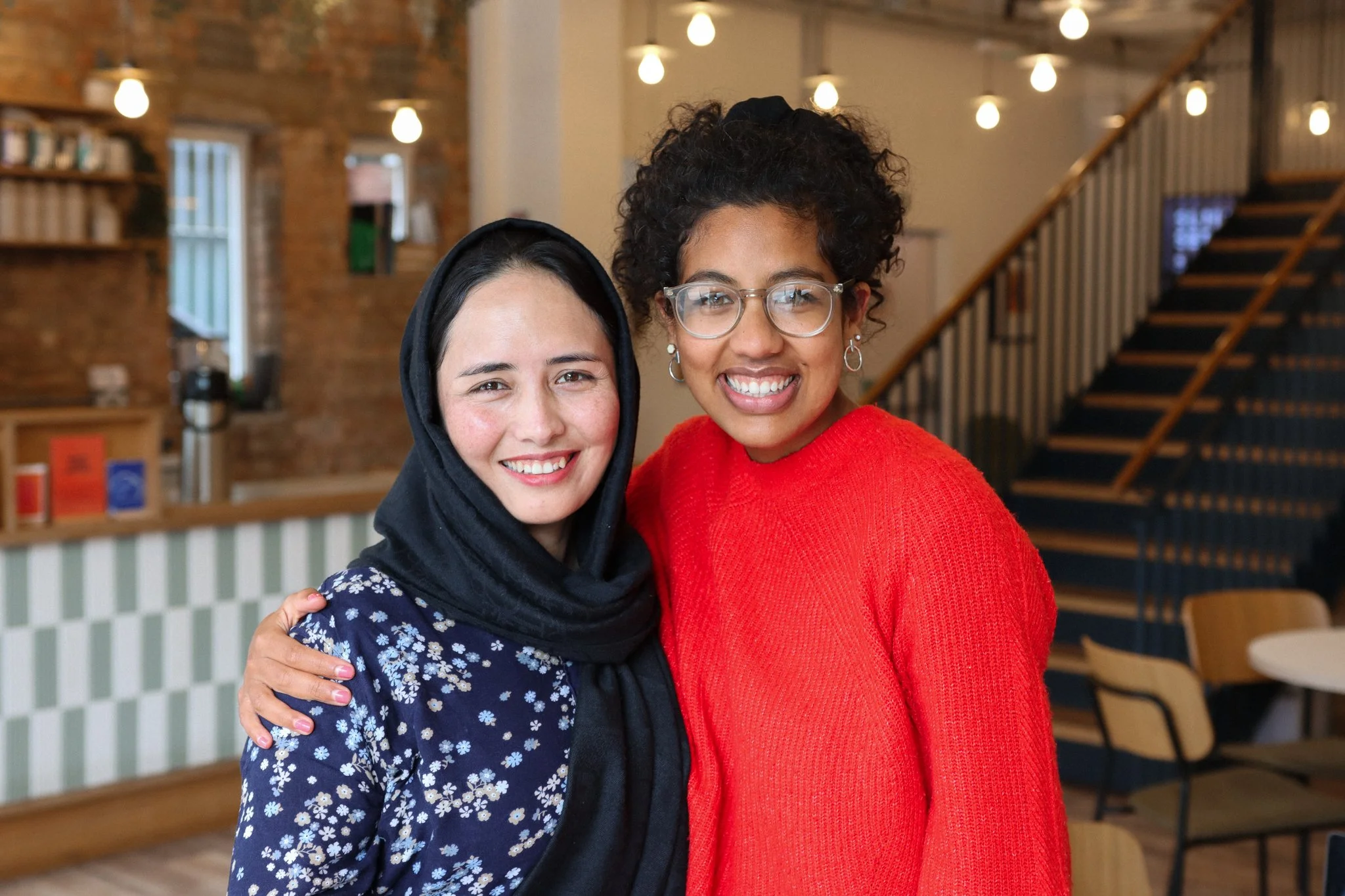
Sabira once chased off a wolf with nothing but a stick. “One day, I was out in the mountains with our animals,” she says, laughing. “A wolf came to attack the sheep, and I had a big stick. I defended them. It was very scary, but I was brave!”
Sabira arrived in the UK from Afghanistan four years ago and now lives in London with her husband and daughter. Earlier this year, her parents joined her and her siblings- a reunion that brought joy and comfort. However, settling in a new country hasn’t been easy. “In the beginning, I was very sad because of my country,” she says. “It was very hard to leave everything behind.”
Naiha moved to London almost 11 years ago to attend university. At the same time, she became part of King’s Cross Church, and has been involved in its community ever since. Their friendship began when Sabira, struggling with damp in her flat, came to the Community Café at King’s House at the invitation of fellow school Mum’s Jo and Lulu. A few days later she was given a dehumidifier. “That helped so much,” Sabira recalls. “She was so kind, even though we didn’t know each other.” For Naiha, her first impression of Sabira was equally strong. Despite being unwell at the time, “She had this calm, gentle presence… she was so warm and kind, even in a tough situation.”
The two grew closer over time, bonding through activities like Craft and Conversation on Mondays and women’s football on Tuesdays. “I enjoy football, enjoy playing, and getting better every week. It’s really fun… I remember encouraging all the sisters. One of them said, ‘Oh no, I don't have time.’ But I kept pushing her and now she enjoys it! She goes every week and is really happy.”
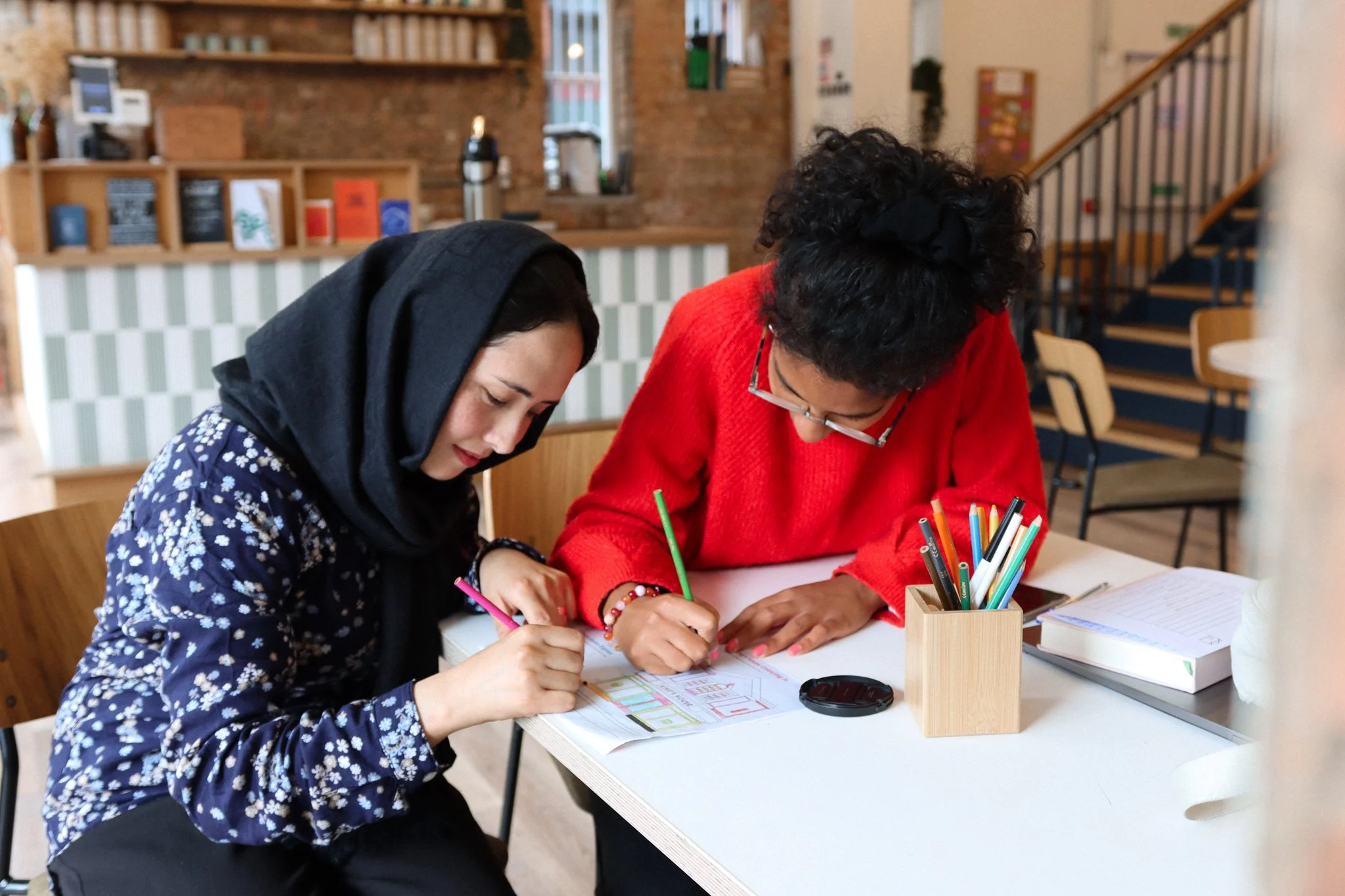
Craft and Conversation, held on Mondays, is another key part of their shared week. They’ve made jewellery, candles, and cards together, and also built friendships. Both women believe these kinds of activities go beyond just filling time. They create space for connection and encouragement. “I’m not naturally crafty,” Naiha admits, “but having people next to you saying, ‘can I help with that?’ and at football, if you feel like you played badly, your team will say, ‘No, you’re doing fine, next week will be better.’ It gives you a space to challenge yourself but also to receive encouragement... and give encouragement too.”
For Sabira, the importance of these spaces extends beyond friendship and fun, they’re also a way to rebuild her career. A trained nurse, she’s working toward being able to practice in the UK. “It’s very good to practise English,” she explained. “I’m a nurse and want to work here. I need to practise more and more English with English speakers. So every week, I try to go to community places like King’s House to learn and practise.”
Their friendship is rooted in care and also cultural understanding. “She reminds me of home,” says Naiha. “I was born and raised in England, but I’m Indian and we often talk about the overlap between Indian and Afghan culture... Like, we usually get the bus back together after craft and it’ll be like 9 p.m. and Sabira will say, ‘Do you want to come for a cup of tea?’ And I’m like no one in London would do that! That kind of spontaneous hospitality.” Sabira adds: “My favourite thing about Naiha… actually everything. She is really nice... When I see her, I feel very warm in my heart, like she’s my family.”
When Sabira is asked what brings her hope, her answer comes quickly. “From here. From this community. From this café. I saw my friends here - they were happy, helpful, full of energy. I was thinking, yes- I can. I started hoping from last year, when I came to this café. And now I’m happy. I am very thankful.”

An Interview with Nia & Zach · Refugee Week 2025

“Churches are often the first and best refuge for those who arrive in this country with nowhere else to turn,” says Nia, who came to London from Iran about a year and a half ago.
“And the people of the church are often the first friend and strongest supporters they find.”
Nia became a Christian when she was visiting the UK and so has to apply for asylum as it was unsafe for her to return to Iran. She was moved from Southwest London to King’s Cross for her asylum accommodation, Caroline (a friend of Nia’s) reached out to Zach to help connect her with people in her new area. Zach recalls, “I remember Caroline calling me on the train, saying, ‘I have a friend who’s been moved far away, and it’d be good to connect her with people in her community… and I was like, yes, great, we'd love to meet her.”
Over time, their initial introduction grew into a friendship rooted in shared faith and genuine care. Nia hadn’t met many young people at church before and recalls being surprised at Zach’s age! “At the church… most of the people… the average age is old,” Nia remembers, laughing. “That’s when, the first time I saw Zach I thought… he’s very young.” Zach, who has lived in London for almost eleven years, recalls their first meeting: “You were sat at the back in the corner… on the soft chairs at the back. And I remember you had a very big smile… Nia is very funny… you have a good sense of humour and you’re always laughing.”
Zach remembers the day Nia received her refugee status - an emotional turning point, but not without its complications. “When Nia got refugee status, it meant that she had to leave her asylum accommodation. And there was the day that you had to leave… and you didn’t know where you would live.” Still, even in the uncertainty, Nia brought joy. “We were on the train and the mood was a bit low… but you and your son were playing this game where you hide something in your hand and guess.” That ability to laugh in the midst of difficulty is something Zach admires: “What I’ve learnt with Nia is that it’s an amazing quality to be able to laugh in the face of trouble… even when things are difficult, you still have a smile.”
For Nia, faith is what carries her through. “I think that’s what Jesus said—that the church is the body of Jesus. That’s… really true because it’s very useful for us. I feel it with my body… my everything.” She shares how church friends were with her in her darkest moments. “All the time I was in hardest moment, that I cry and I don’t have any hope… my friends… I love my friends.”
“My tears—gladness now, not sadness. From happiness… I can’t control my feeling about my friend here.” Zach reflects on this with a quote from Teresa of Avila: “Christ has no body now but yours. No hands, no feet on Earth but yours.” He explains, “As Christians, we are called to be the hands and feet of God—to show love and support, not just to Christians, but to everyone.”
Though Nia now lives far from Muswell Park, she sometimes still travels hours just to visit and pray with her old church community. “I went to Muswell Park because I missed them,” she says. “It was two and a half hours… but it doesn’t matter because I love to see my friends. I pray with them… I feel calm. It’s so good for me.”
On friendship, Nia says “It’s the relationship between hearts… Kindness isn’t dependent on countries or borders… kindness is global. For the human… I love every person. Like humanity. Like kindness. Like friendship.”

What's going on in the DRC? · Refugee Week 2025

The Democratic Republic of Congo is facing a deepening refugee crisis, driven by a resurgence of violent conflict in its mineral-rich eastern provinces. For more than three decades, this region has been marred by instability, but recent escalations have triggered one of the most significant waves of displacement in years. Fighting intensified in early 2025, as the M23 rebel group seized large areas of North and South Kivu, displacing tens of thousands and sparking widespread fear among civilians.
The violence, involving clashes between non-state armed groups, the Congolese armed forces (FARDC), and M23 rebels, has led to serious human rights violations, including attacks on civilians, child recruitment, and the destruction of homes. Despite a declaration of principles signed between the DRC and Rwanda on 25 April 2025 in support of peace, heavy fighting resumed the very next day, underscoring the fragile and volatile security landscape.
The humanitarian fallout has been immense. Between January and late April 2025, Uganda received over 60,000 Congolese asylum seekers—a staggering 603% increase compared to the same period in 2024. In just four weeks (1–27 April), 22,589 people fled across the border. Meanwhile, more than 70,000 Congolese, mostly from Uvira, Walungu, Bukavu, Saké, Minova, and Goma, have crossed into Burundi since mid-February. Host countries are struggling to accommodate the rapid influx, with resources stretched thin and camps becoming dangerously overcrowded.
Inside the DRC, displacement continues at scale, with many families living in makeshift shelters and cut off from access to clean water, healthcare, and education. The crisis is both a protection emergency and a test of regional solidarity. It demands urgent international support—not only to meet the rising humanitarian needs but also to ensure safe refuge and long-term solutions for those forced to flee.
Here are the key statistics as reported from Amnesty International and UNHCR:
Between 1 and 27 April, Uganda received 22,589 asylum seekers from DRC, bringing total new arrivals since January 2025 to 60,569, an increase of 603% compared to the same period in 2024.
7.3 million internally displaced in the DRC
70,000+ refugees fled to Burundi since mid-February 2025
Sources

What's going on in Afghanistan? · Refugee Week 2025

Since the Taliban regained full control in August 2021, Afghanistan has experienced one of the most severe and enduring refugee crises in decades. By the end of 2023, around 6.4 million Afghans were recorded as refugees abroad (primarily in neighbouring Iran and Pakistan), while another 10.9 million were internally displaced within the country. Inside Afghanistan, an estimated 23.7 million people, more than half the population, now require humanitarian and protection assistance, with women and children suffering disproportionately.
The crisis is driven by overlapping factors: decades of conflict, mounting economic collapse, repeated natural disasters (including floods, droughts, and earthquakes), and Taliban-imposed restrictions that severely curtail women’s rights, education, and freedom of movement. Acute food insecurity affects roughly 28% of the population, which is about 12.4 million people.
In neighbouring Pakistan and Iran, which host some 7.7 million displaced Afghans, pressure on public services has intensified. Recent government crackdowns in Pakistan resulted in hundreds of thousands of Afghans being deported or coerced into return. Amnesty International denounces such forced returns as unlawful and dangerous, highlighting reports of violence, ill-treatment, and pushbacks that violate fundamental refugee protections.
UNHCR maintains a non-return advisory, stating that return must be voluntary, safe, and dignified. However, many returns are being driven by coercion, with tens of thousands occurring each month in 2024.
The international response includes emergency shelter, food, clean water, cash grants, protection monitoring, and efforts to strengthen community resilience. UNHCR aims to assist 110,000 returnees with cash support and training, and is working to expand resettlement pathways in third countries. However, chronic funding gaps remain, with only 25 to 36% of the $3 billion needed in 2023 raised.
This complex humanitarian emergency demands sustained global support, meaningful refugee protection, and fair responsibility-sharing by host nations and international donors.
Here are the key statistics as reported from Amnesty International and UNHCR:
51% of Afghan refugees and asylum seekers are women and girls (2025)
51% are children, making up half of those displaced
Over 97% of the population now lives in poverty following Taliban policies
In 2023, only 3,300 refugees were resettled globally from Afghanistan, despite 9,600 submissions
Around 6,000 more Afghans found safety through alternative pathways, such as family reunification or scholarships.
Sources
https://www.amnesty.org/en/location/asia-and-the-pacific/south-asia/afghanistan/report-afghanistan/
https://reporting.unhcr.org/operational/situations/afghanistan-situation

T's Story · Refugee Week 2024
WRITTEN BY TOMMY SHARPE
In the late 1990s, Afghanistan was controlled by the Taliban, who imposed a hardline version of Islam on the nation. Following the September 11 attacks, the US military deposed the Taliban, implementing a power-sharing government. A decade later, the US and other nations began withdrawing troops from the region, and the full UK and US withdrawal was completed between 2020 and 2021. Over the course of this withdrawal, a growing Taliban insurgency brought violence to much of the region.
T had left Afghanistan during this period, travelling to the UK because he spoke the language excellently. I also imagine the visibility of UK troops contributed to his decision-making, but I can’t put these words in his mouth.
The first time I met T, he was shocked we were the same age, born just 1 month apart. “How are you so tall” he said, jokingly jumping up to mirror my height. He went about trying to explain our height difference, “Maybe it’s because in England you don’t work so hard”. T is from a small village, and had been working on his dads farm since he was 13 years old. “Everyone in Afghanistan does this, lifting heavy things. Maybe that is why I am short”. He laughed.
He loves football, and dreams of one day going to a stadium. “We all play football in Afghanistan. One village will play another village. I always score” he said cheekily, mimicking his striking action.
T has excellent English, and has found many of the classes he is invited to too easy for him. He still often goes to help his friends. This is one of T’s most obvious characteristics – he is a fantastic friend. He often carries out the legwork in conversations where other people from Afghanistan are struggling and is always the first to introduce himself to new people.

H's Story · Refugee Week 2024
WRITTEN BY TOMMY SHARPE
British forces occupied Eritrea in 1941 and brought it into the United Nations General Assembly. In 1952, the UN general assembly voted to make Eritrea part of Ethiopia, sparking over 3 decades of conflict as Eritreans fought for independence. It gained a form of independence in the 2000s.
It is a country plagued by droughts, a one-party state, and has seen frequent conflict over the last decade. It has the least free press in the world, below even North Korea. Hundreds of thousands of people have fled from Eritrea according to the UN, including H.
H is up there as one of the friendliest people I’ve ever met. He’s one of those people that would’ve been head boy at school. He knows so many names and always gives people a handshake and a hug.
He’s been in the UK for just over a year, spending most of that time in London. He lives in a hotel, stuffed into a room with 3 other asylum seekers, but he never complains. H has great English. He is going to college to improve his English even more, and has also taken up maths classes – He likes Maths. Despite living off £8 a week, he has a great fashion sense, and saves up to buy shoes and hats.
I first met H over a game of table tennis. I won the first game, but quickly learned that he let me win to be polite. He beat me 11-5, then 11-3 in the next 2 games. I haven’t played him since. Everyone wants to beat H at table tennis. He’s built a reputation, and everyone wants to be the person that topples it.

S's Story · Refugee Week 2024
WRITTEN BY TOMMY SHARPE
Iran ranks 18th worst in the world for freedom of expression. It has one of the highest execution rates in the world and a judiciary that targets journalists and human rights activists. As well as this political oppression, the country is one of the worst places globally to be a Christian or part of the LGBT community.
S came into the ESOL class hesitantly, waiting for the teacher to introduce him to me. Once we got chatting, he opened up about his journey to the UK and how sad he felt about the family he had left behind.
S loves history. He told me how he wanted to study it if he was allowed to stay, and ultimately how he wanted to have a job in the field. His eyes lit up as he told me about his visit to the British Museum.
S had spent a long time in Germany rebuilding his life before being told to leave after over half a dozen years in the country. He said England was the obvious choice because he loved London - he told me about how he had seen it in TV shows growing up - and because other than Persian and German, English was the only language he knew.
S told me he hoped he would be allowed to build a life here where he could be happy, but he understood the government had to make difficult choices. I said that if I was in charge I would let him stay.

The Significance of a Spare Room: Embracing London's Housing Challenge (Part 2)
Written by Melissa Pear
When we decided to start our lives together in London, we wanted a space to host people. Whether through meals, chats, or accommodation, we did so for many friends and family over the last five years. For some of us, this is easy and familiar territory.
Recently, we hosted a refugee who we met on Café Saturdays at Kxc. After many years, he finally received his refugee visa and was on his way to starting his life in the UK. However, the housing shortage in Kings Cross and Hackney means that in the short-term, he was in limbo because he could neither stay in the asylum hotels nor find long-term accommodation quickly enough. In other words, it was possible that he could be homeless.
We, therefore, decided to offer our spare room to give him some time to find long-term accommodation and want to share our experience below. We hope that by sharing our experience, we can encourage and challenge others to address this growing issue in our community.
Mi casa su casa (my house is your house)
You might be familiar with the Spanish saying “my house is your house”, a phrase we often use to convey hospitality or for guests to “make yourself at home”. However, the truth is “mi casa es la casa de Dios” (my house is God’s house) because it was only through God’s favour that we have the financial capacity to have a home with a spare room in Central London. When we recognise this, hosting someone who needs accommodation not only blesses the individual but is also an act of worship and acknowledges that God is the Provider of all things.
Every bit counts
We were worried that we’d be “bad hosts”. We both finished work late and we did not have the capacity to prepare meals or be present in our home. We also committed to hosting our families when they came to visit later in the year and on a practical level, it might be a little squishy with seven of us living in a two-bedroom flat.
To be clear, these are valid practical challenges to consider before hosting but we weighed these up against the opportunity to bless someone with a roof even if it is for a short period. We knew this would alleviate some pressure of finding long-term housing during a housing shortage.
Serving with proximity
Many public discussions affecting refugees and asylum seekers are on a macro level. However, hosting allowed us to witness and get close enough to the challenges facing refugees and asylum seekers. For example, how does one go about finding a job? What address should one use for DBS checks?
If we follow Jesus’ example, he lived, ate and walked alongside us. In other words, he served not from a distance but with proximity to all of us.
How you can help:
Hosting: If you’d like to know more about being a host or landlord (refugee letting scheme), please get in touch.
Pray: Lift up those without shelter in your prayers and speak with God about how you can contribute to positive change in your community.
Join the team: If you’re interested in getting involved with the wider Refugee Ministry then sign up here. You could also contact Naiha, a community advocate at KXC.
Stay tuned: Keep an eye out for more information and resources from KXC. You don't have to have everything figured out to get started; begin by having a think, praying, and starting the conversation with God. He will provide the people and the place.
Let's join together in growing a community where everyone has a place to call home, where generosity knows no bounds, and where the love of God is shared with those who need it most.

What's going on in Sudan? · Refugee Week 2024

On April 15th 2023, violent clashes erupted between the paramilitary Rapid Support Forces (RSF) and the Sudanese Armed Forces (SAF).
The conflict has primarily been described as a power struggle between the leaders of the two forces. General Mohamed Hamden Dagalo (also known as Hemedti) the head of the RSF and General Abdel Fattah al-Burhan, the head of the SAF.
In 2019, both men were involved in a coup which overthrew long-term President Omar al-Bashir, and oversaw the following civilian-led government. However, they both deposed that government and took power themselves in October 2021. Afterwards, tensions emerged between the two leaders over Sudan’s future and this power struggle eventually erupted into large-scale violent conflict on 15th April 2023.
Prior to the conflict, Sudan was already experiencing a humanitarian crisis, owing to extreme weather shocks, social, political and economic instability, rising food prices and outbreaks of disease all pushing people into poverty and displacement.
The outbreak of conflict has only exacerbated these challenges, over 8 million people have been forced to flee their homes since April 2023, making Sudan the world’s largest displacement crisis.
Humanitarian access has been severely curtailed, amidst reports of mass killing and displacement, making it extremely difficult for aid to reach vulnerable communities.
Just over a year since the conflict began:
Over 14,000 people have been killed
Around 6.4 million displaced within the country- making it the largest internal displacement crisis globally
Over 8 million people have fled their homes, taking refuge inside and outside
the country- with children representing about half of the people displaced
In February 2024 the International Rescue Committee said Sudan is facing a “catastrophic hunger crisis”, warning seven million people could face extreme hunger by June 2024
Sudan is now the country with the largest number of displaced people and the largest child displacement crisis in the world.
Sources:
UNHCR Sudan crisis explained - https://www.unrefugees.org/news/sudan-crisis-explained/
Crisis in Sudan: What is happening and how to help - https://www.rescue.org/uk/article/fighting-sudan-what-you-need-know-about-crisis
Sudan: The “forgotten” conflict - https://commonslibrary.parliament.uk/sudan-the-forgotten-conflict/

What's going on in Ethiopia? · Refugee Week 2024

Since November 2020, the Ethiopian federal government and Tigrayan fighters have been in conflict, resulting in the deaths of thousands of people and the displacement of millions of Ethiopians.
Abiy Ahmed, Ethiopia’s prime minister, took office in 2018 following anti-government protests against the ruling coalition- the Ethiopian People’s Revolutionary Democratic Front (EPRDF).
Since 1994, Ethiopia has had a federal system in which different ethnic groups control the affairs of 10 regions. For three decades the EPRDF had been in power and the coalition was previously dominated by the Tigray People’s Liberation Front (TPLF). When Abiy Ahmed was elected as leader, he promised a transition to democratic rule and political reform. In his early years, he saw the release of thousands of political prisoners, and the removal of some opposition parties from lists of terrorist groups. He was also awarded the Nobel Prize for Peace in 2019 for the work he did ending the country’s long-running border dispute with Eritrea.
The TPLF (Tigray People’s Liberation Front) saw its power in government diminish with Abiy Ahmed’s instalment. Tigray's leaders viewed Abiy Ahmed’s reforms as an attempt to centralise power and destroy Ethiopia's federal system. As a result, relations between the TPLF and the Ethiopian federal government soured. The feud came to a head when the TPLF ran their own regional elections in September 2020, despite the federal government's decision to postpone all elections due to the covid-19 pandemic. It was an unprecedented act of defiance against the federal government and both sides then labelled the other as "illegitimate."
Tensions escalated and the conflict erupted on 4 November 2020, when Abiy Ahmed ordered a military offensive against regional forces in Tigray. He claimed it was in response to an attack on a military base housing government troops, but the TPLF asserted that their forces were acting in self-defence against a planned federal attack.
Fighters on all sides deliberately hindered humanitarian access and committed atrocities against civilians. During the conflict, several European Parliament resolutions condemned the human rights abuses and non-respect of international humanitarian law by all parties.
Estimates by Professor Jan Nyssen at Ghent University suggest that since August 2022 as many as:
600,000 people have died in the conflict
Between 31,300 and 89,300 civilians have been killed or massacred
Between 228,000 and 356,100 people have died due to famine
Between 124,000 and 155,000 have died from lack of medical attention.
The exact number of casualties is not clear and aid workers have been unable to access large areas of Tigray where communications are largely cut.
More than two million of Tigray's six million people have fled their homes since 4 November 2020. And tens of thousands of people have sought refuge in neighbouring Sudan and beyond.
Sources:
Ethiopia's Abiy Ahmed: The Nobel Prize winner who went to war - https://www.bbc.co.uk/news/world-africa-43567007
Ethiopia’s Tigray war: The short, medium and long story - https://www.bbc.co.uk/news/world-africa-54964378
Ethiopian civil war - https://www.bbc.co.uk/news/topics/cr2pnx1173dt
Conflict in the Tigray region of Ethiopia - https://lordslibrary.parliament.uk/conflict-in-the-tigray-region-of-ethiopia/
Ethiopia: War in Tigray- Background and state of play - https://www.europarl.europa.eu/thinktank/en/document/EPRS_BRI(2022)739244#:~:text=The%20European%20Parliament%20has%20been,humanitarian%20law%20by%20all%20parties.
Mission Month – Tree of Life Manenberg


For the last few years KXC has partnered with Tree of Life, an amazing community based in the township of Manenberg. Here’s a short reflection from Adam, an ex-KXC congregation member who now lives and works with Tree of Life. For the last 3 years he has served in the CRU62 and Maak ‘n Plank ministries.
Jam in the coffee by Adam Hughes
When I was 23, God made it clear he wanted me in Cape Town, South Africa. So over 6 months of divine meetings and encounters, I ended up packing my life up and moving to a township called Manenberg.
In South Africa, townships were born out of a white supremacist government regime called Apartheid, and were places for people who had been forcefully removed from their homes and communities so that “crime could be controlled”. This racial divide produced widespread trauma through communities, addiction, poverty and the formation of gangs. This place and it’s history has a lot more nuance but it's important to have a brief understanding of the context I entered into.
I work and live in a sober living discipleship house in Manenberg which creates a safe space to help young men leave behind gangsterism and drug addictions, and ultimately helps them meet the only person who can truly set them free, Jesus.
Most people's reaction to this sadly sees me as some sort of saint but the reality is the day-to-day of this job is fairly ordinary. I spend a lot of my time telling lads to stop shouting at girls out the car window or "no you can't have a 5th cup of coffee with 6 sugars in it". The big, holy breakthrough moments that everyone imagines when I tell them what we do are few and far between but that’s because freedom and transformation are often slow journeys. They require faithfully showing up and trusting that God will do the rest.
This brings me nicely to today's topic, old behaviours. This is a phrase we talk about a lot as we do life in the house. When the guys come into the house we show them that addiction isn't a drug problem, it's a heart one. It's a practical response of self-protection against pain and trauma, self-soothing. One of the common things we see is that when the drugs are cut out, sugar becomes the next God. Sometimes it's food or coffee but to be honest I've seen it all - I once caught a lad furiously spooning apricot jam into his coffee trying to get his "next hit".
I think it would be good to break this down a little bit so we are all on the same page. Essentially an old behaviour is normally something you used to do when you were unaware of its root. In this context the root of these behaviours is not good i.e. another attempt to numb pain that you have pushed down deep.
We aim to help walk with these guys and with the holy spirit (basically it's all the holy spirit) to reveal these blind spots and address the root of the pain that is causing them to have these learnt behaviours. You would think that once the blind spot or root is revealed its job is done right? But it’s not always the case. I've learnt this one first-hand. Sometimes when God opens our eyes to these things it's an instant beautiful shift and other times it's not.
For me, the Christian culture I was brought up in really pushed hard "experiential Christianity" meaning there's a lot of us chasing good feelings and holy spirit explosions. However, I've come to see the beauty of slow, faithful transformation in which you get to know the closeness and witness of God through all the suffering in a way you wouldn't otherwise. This gives space for us to be a people that mature and have our "spiritual palette" changed. We become a people that crave the closeness of God, not just the nice shiny things he gives us.
So, old behaviours. Even after the blind spot is revealed these things tend to crop up like a horrible game of emotional whack-a-mole. It can take months or even years for these things to change which sounds pretty depressing but I want to make a case for the opposite. When you walk closely with people the tendency is your brokenness brings out theirs but their healing can lead you into yours. I've experienced all of this first hand but I also know the frustrating feeling of an old behaviour cropping up time and time again and asking myself "When will this go?".
I used to be a mechanic so I like fixing things, including all my fragile emotions. I often found that if I started seeing an old unwanted behaviour show its head again, I would take things into my own hands and work out ways I could squash it. Maybe more counselling? Have I got the root wrong? What else can I be doing?
What I'm not saying is to lose all self-awareness but all of these things were just a form of violence to myself. I wasn't allowing myself to be in pain or to just be human. Ultimately I was trying to put God out of the job and fix myself. The reality is this, only God can heal me but if every time a part of me that I don't like comes out and I violently try to sort it out myself - there's not much hope.
The reason I'm driving this home is because if we are unable to be kind and gentle with our hearts, how can we have patience and kindness for others? It's a floored dynamic. As we are gentle and kind to ourselves we will allow God to tend to the wounds and then when we start spooning jam into the coffee again, we can slowly and gently bring ourselves before God and let him do what he does best.
Over time you will start to see that the same way you handle yourself will be how you handle others. I think we all long to be a people that operate from a space of peace, gentleness and kindness right? This is where we start.
The Significance of a Spare Room: Embracing London's Housing Challenge
Written by Naiha Masih, James Venvell, Neja Zupan and Harry Brown

Living in London varies for everyone. We’re fortunate enough to be in a central London community house and know where we’re going to sleep each night. However, many aren't as fortunate.
We wanted to have spare room for anyone who needed a place to stay and the comfort and stability of a home, our house made the deliberate decision when we moved in that some of us would share bedrooms. This choice has meant we have the financial capacity to offer a spare room to those in our community who need it most.
By sharing our experience, we aim to shed light on the broader narrative of housing challenges in London. We hope to encourage others to join in the conversation, growing awareness and action to address this issue in our community.
Living generously
Our motivation to have a spare room goes beyond practicality. It's a call to live generously, inspired by the belief that our abundance should be shared with others. This generosity finds its roots in our understanding of God's extravagant generosity and love.
We've opened our doors to a range of people, including ex-offenders, refugees, friends of friends who don't know anyone in London and of course our friends and family. It’s not always straightforward and sometimes takes time to get right. But, when we remember Jesus said in Matthew 25:35-37 “For I was hungry and you gave me something to eat, I was a stranger and you invited me in. Truly I tell you, whatever you did for one of the least of these brothers and sisters of mine, you did for me,” it hits home that before it’s hosting, before it’s loving your neighbour - it’s worship.
Care beyond shelter
Our commitment goes beyond offering a place to stay, it's about offering genuine care. Through shared meals, games, and heartfelt conversations, we aim to create an atmosphere where people in need feel valued and cared for. This approach reflects our desire to embody what it says in James 1:27, seeking to uplift those in distress.
We’re not able to give loads of money away or be much of a financial support to people, but for the housemates who’ve chosen to share a room, they’re giving a piece of themselves. They’re putting others' needs before their own, just like the early church did to try and support people on the margins.
Challenges and rewards of hosting
Hosting people in need comes with its set of challenges, including language barriers and cultural differences. It involves sacrifice, like providing resources for their needs and demonstrating patience and compassion when it comes to tricky conversations or behaviours. Yet, the joy brought by building relationships and seeing them relax and thrive far outweighs these challenges.
Hosting provides a unique opportunity to be part of someone's transformative journey toward stability. The shared experiences create lasting memories and cultural understanding, blessing all of those involved.
Inspiring positive change in our city
Living in shared community challenges us to embrace diversity and reflect the compassionate spirit of Jesus. It prompts us to reevaluate our social circles and deepen our understanding of injustices in our society.
All we have comes from God, and that includes our time, space, shelter and money. It is important for us to love others because Jesus first loved the foreigner, neighbour, outcast and enemy. Hosting isn't merely about providing shelter; it's about contributing to positive change in our community and sharing the boundless love of our Father.
Our part to play – here's how you can get involved:
Hosting: If you’d like to know more about being a host or landlord (refugee letting scheme) we have an information evening with Housing Justice on Monday 18th March. Sign up here.
Pray: Lift up those without shelter in your prayers and speak with God about how you can contribute to positive change in your community.
Join the team: If you’re interested in getting involved with the wider Refugee Ministry then sign-up here. You could also get in touch with Naiha, a community advocate at KXC.
Stay tuned: Keep an eye out for more information and resources from KXC. You don't have to have everything figured out to get started; begin by having a think, a pray, and starting the conversation with God. He will provide the people and the place.
Let's join together in growing a community where everyone has a place to call home, where generosity knows no bounds, and where the love of God is shared with those who need it most.

Mission Month - Choices Islington
Choices is a compassionate and constructive Christian response to unexpected pregnancy and abortion, and on Sunday their director, Sophie Guthrie, shared some of the stories coming out of their work.

Last Sunday we heard from Sophie, Director of Choices, about the importance of discussing unplanned pregnancies and their impact on people and families.
Choices is a compassionate and constructive Christian response to unexpected pregnancy and abortion, offering counselling and practical support for whatever choice women (or men) make following a pregnancy crisis.
As a church, we’ve partnered with Choices for over 12 years and believe in the amazing work that this organisation is doing. The organisation runs one of their key services, the Boutique, here in Kings House – offering pre-loved baby clothes and equipment to those who need them.
Here is a story from just one of the many people impacted by Choices:
"I am so grateful to Choices for providing a non-judgemental, supportive space and invaluable help working through the complicated feelings I had in finding out I was pregnant. I found out I was unexpectedly pregnant at five weeks. Shocked, scared, and feeling I neither wanted to have a baby nor a termination, I reached out to Choices.
I was quickly booked for a one-hour online session with one of their counsellors. She immediately made me feel at ease. I was able to talk openly and frankly, without fear of judgement, about how overwhelmed I felt, and about the concerns I had both around having a baby and a termination. The support helped me to clarify my confusion.
After our first session, I received notes laying out my thoughts/feelings and gains/losses as I had described them. I cannot tell you how invaluable it was to receive this and see my feelings and many fears written in a clear structure. It helped to simplify the decision at a time of feeling so confused. We subsequently had two more sessions to further explore the crippling fear and stuckness I felt about making this decision. Both were so helpful.
I came to the service because I didn't know where else to turn. I felt lonely, afraid and guilty for not knowing what I wanted. Choices and their wonderful counsellors provided me with a safe space and the support I needed to work through a complex maze of heavy feelings and reach a decision about my pregnancy. I am beyond grateful to the team at Choices!"
So how can you get involved?
Volunteer
Choices need volunteers to help set up the Boutique on a Wednesday from 9am at King’s House. This could even be for an hour or so before work. They’d also love two more volunteers on a Friday to help with receiving and sorting donations for Boutique between 10am and 12pm.
If you’re interested then please get in touch and/or drop in on Friday Feb 23 from 10am-12pm to meet Marianne, the Boutique Manager, and see how it all works in person.
Support Financially
With International Women’s Day and Mother’s Day both about a month away, why not send a beautiful hand-designed card to a woman you love and want to champion, or to your mother, a mother, or a mother figure in your life? Choices’ very own Marianne Hanbury, Boutique Manager, is designing cards this year and by purchasing them, you’ll be championing your loved ones while supporting others who might be struggling at this moment. Please get your cards from the card shop (keep checking back for updated designs): https://www.choicesislington.org/choicescardshop
Signpost
As Sophie said, 1 in 3 women have an abortion and at least 1 in 4 pregnancies are unplanned. This is an issue that affects us all in one way or another, whether or not we are aware that someone close to us is going through it. So let’s be aware, and not be afraid to support those who might feel they are facing a crisis. Do share Choices’ details with anyone who might need the support – info@choicesislington.org or https://www.choicesislington.org/.
Pray
Please be praying for the work of Choices and for the clients that they see.
If you have any questions or thoughts or are impacted by this topic then please get in touch – we’d love to speak with you.
Alex's Story: 'This is where I'm supposed to be'
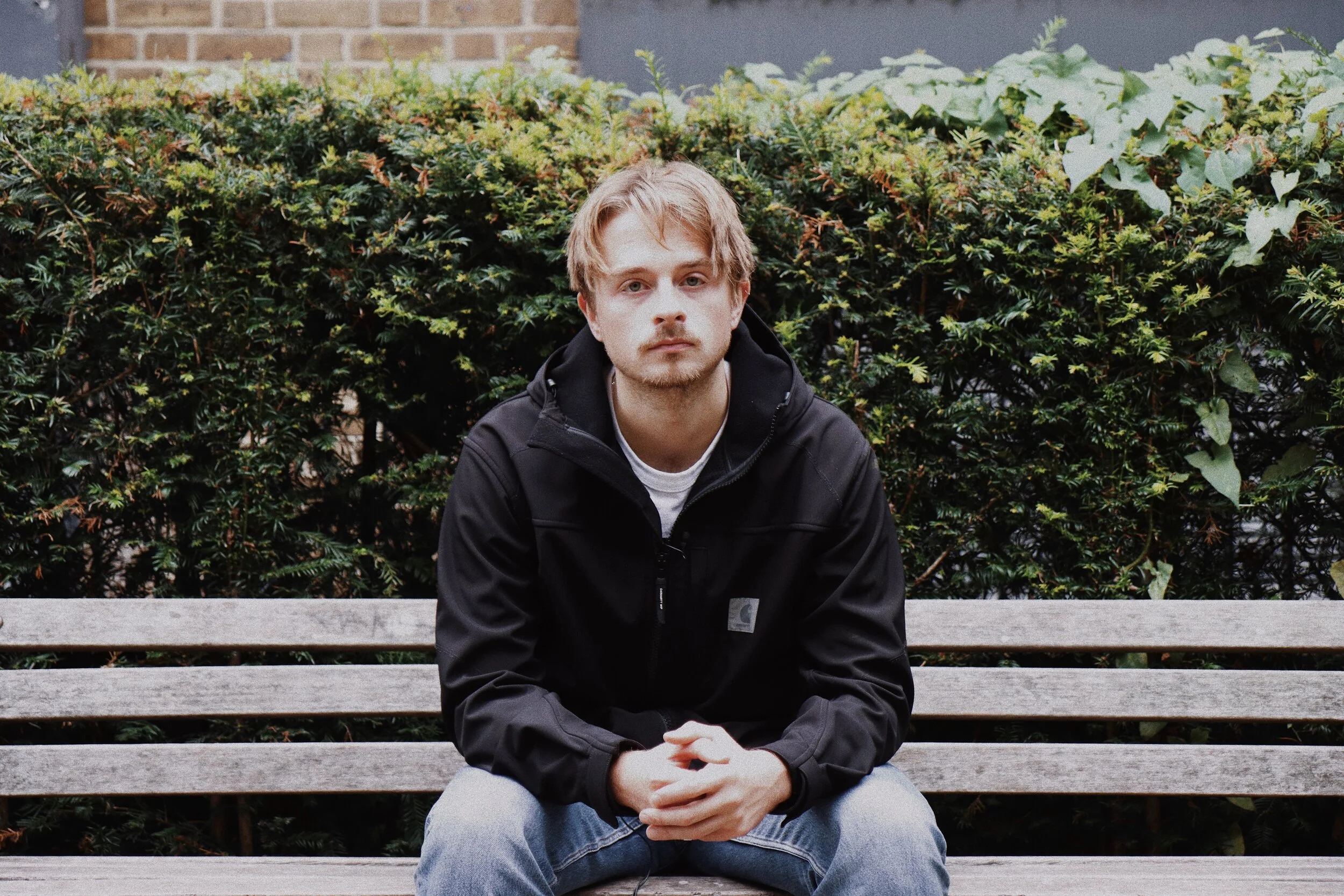
This is Alex. Here’s some of his story and experience of doing the Alpha Course.
This is Alex. Here’s some of his story and experience of doing the Alpha Course.

Kingdom Dreamers
Kingdom Dreamers, the new EP from KXC and Tom Eccleshall is out now! Read the story behind each song here.
By Tom Eccleshall
We believe these songs are a timely resource for the church today. The EP contains five songs and Tom shares the story behind each one here.
Fighting Back
‘I wrote this song with my wife, Sarah, during the lockdown to help our church respond to the pandemic. At the time I was starting to feel ill with some of the symptoms of Covid-19 and I began to feel fairly anxious. In the Bible, during the darkest moments, people worshipped and it changed things. One of the most powerful things we can do when we are in the middle of a struggle is to defy that struggle with praise and worship. We believe that this is a song of hope for the church in times such as these.’
God Of Freedom
‘This song started as a simple prayer for God to release his freedom in our times of worship at our church. It was intended to be a small refrain to open our worship set, and nothing more, but it soon became clear that God was really using this song in an exciting way. The song is based on 2 Corinthians 3:17, “where the Spirit of the Lord is, there is freedom,” and this is repeated throughout the song. I wanted to repeat the line enough times until we would see it come into being, like the way ancient monks would chant a phrase over and over again.’
Enough
‘I wrote this song with some friends, Elias Dummer and Jeff Johnson. It was one of those incredible moments, where I had a song idea prepared which I was stuck on and it was all about Jesus being enough. Then at the start of our writing session, Elias said “I really want to write a song about Jesus being enough.” The rest was beautiful to write, as we dug deep in the verses to try to articulate why Jesus is enough. Success, money, or even songwriting and leading worship would never satisfy. If our identity is rooted in any of these things then we’re going to be left unsatisfied. This song reminds me that my identity needs to be firmly rooted in Jesus – and nothing else.’
Kingdom Dreamers
‘Bill Johnson once said, “Songwriters: sing what you want to see the church look like in 5, 10 or 15 years time.” When I first read this I was really moved, and instantly began to picture what I’d love to see our church and city look like in five years time. The verses of this song are a prayer, for what God could do in our community over the coming years. This song encourages our church to dare to dream again, and to choose hope that we might see God move in ways we’d never seen before in our community.’
Father (For Noah)
‘This song is a really special song to me. It’s not one I’d play in times of worship at our church, but it still felt really right to put it on this EP. Recently my wife and I had our first child, Noah, and as many parents have discovered it is a huge adjustment to life, but also a time of great fragility. I remember in the first few months of Noah’s life, just trying to imagine what sort of father I wanted to be, and then it hit me: even if I dedicated my whole life to being the best father in the world, I would sadly still fall short. Unfortunately, despite my best intentions I will let him down. So with that in mind, what can I wish for him? This song is like a message in a bottle to my son in the future. I want him to know that I love him unconditionally, but more than that, I want him to know that his Father in heaven will not let him down. I hope this song is helpful for any parents out there, that you won’t forget you need God’s grace too. Also, for anyone whose earthly father is not around anymore – whatever relationship you’ve had, and we all know that no earthly father is ever perfect – but we all can unite and relate around our Father in heaven who always loves us perfectly. And finally, I hope this song is a prayer for anyone who longs to see their children know their Father in heaven as their saviour.’
Tom + Sarah Eccleshall (Worship Pastor, KXC) and Pete + Bee Hughes (Leaders, KXC)
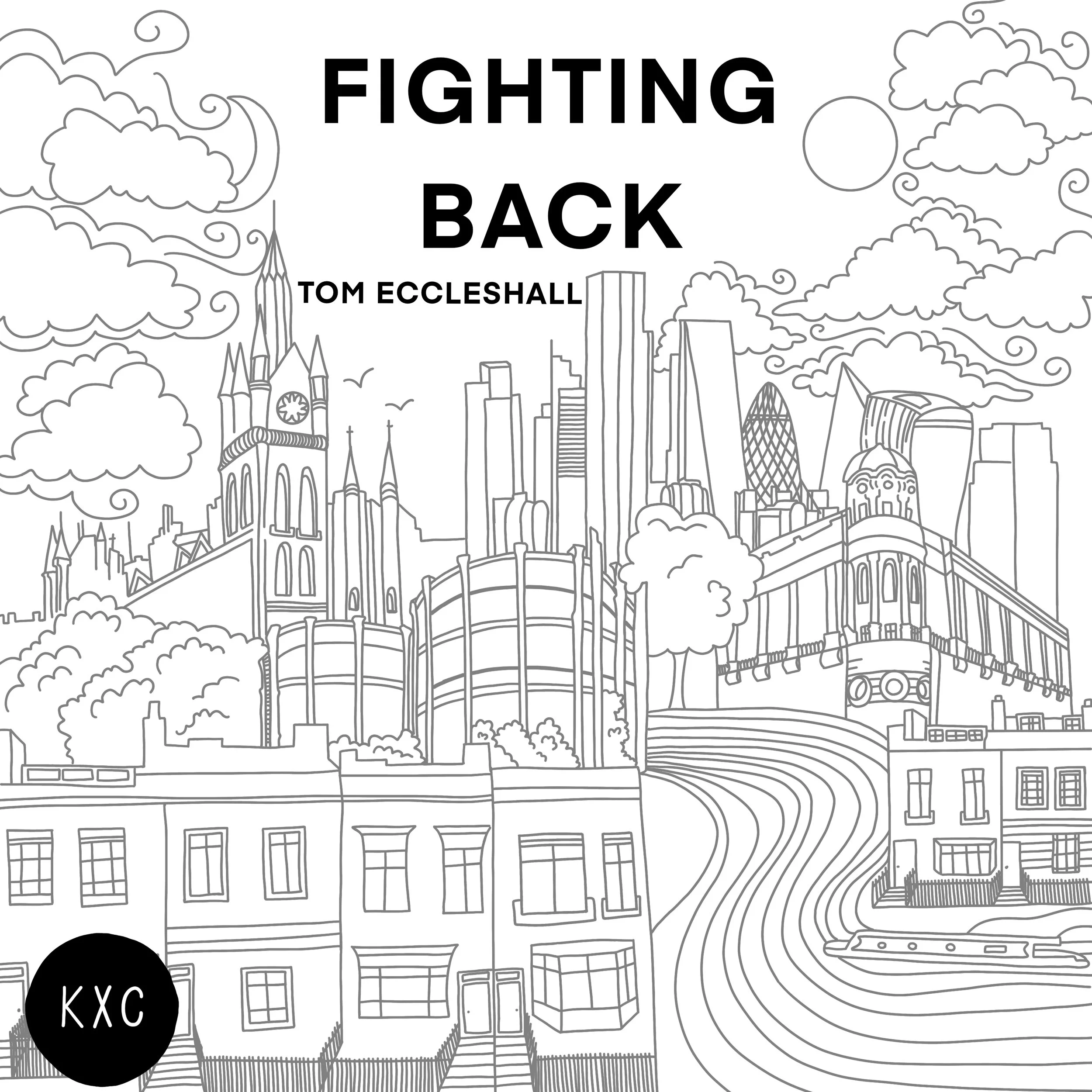
Fighting Back
‘Fighting Back is a song which I started to write recently when I was beginning to feel unwell with suspected Covid-19 (luckily in my case I had relatively mild symptoms).’
By Tom Eccleshall
‘Fighting Back is a song which I started to write recently when I was beginning to feel unwell with suspected Covid-19 (luckily in my case I had relatively mild symptoms). It was just at the start of lockdown in London. Given the way the pandemic was unfolding, it felt like a pretty scary time. Our first child was just six months old at the time and I felt guilty for bringing this virus home to Sarah and our boy. I began feeling fairly anxious. I started to think about all of the destruction that this virus is causing – it’s bringing death, it’s attacking the frailest in society disproportionately, it’s crippling economies, it’s breeding fear and it’s even shutting churches down. It seemed like everything this virus was and is doing is the antithesis of what God does.
‘If there’s one thing I’ve learned in my time overseeing worship at KXC, it’s that worship is far more important than I’d ever appreciated beforehand and is so much more than singing songs. I’ve learned that when you participate in worship, you are actually entering into a spiritual battle. Ephesians 6:12 talks about this – that our battle is not against flesh and blood but against what is unseen. With that in mind, while lying in bed with a fever from this virus, I started to write and sing what became the opening lines to this song: “I’m fighting back with a song of praise, I’m fighting back lifting up Your name,” and it became a prayer that God would let his kingdom come, right here in our city and this country, right now.
‘Sarah and I wrote the rest of the song during the lockdown in the following few weeks. What was becoming clear was that although this virus wasn’t from God, he could still use it. We were beginning to see churches working together in ways we’d never seen, oppression and injustices were being exposed and the church was also being refined. We felt we wanted to capture this theme in the song – that God would continue to redeem his people and even though we were in numerous scattered rooms, his kingdom was still advancing.
‘The final piece in the puzzle for the song, arose during our Tuesday morning KXC staff meeting over Zoom, where Pete shared 1 Thessalonians 4:13: “we want you to know what will happen to the believers who have died so you will not grieve like people who have no hope.” Instantly, I knew that needed to be the bridge of this song. Even amongst all the suffering, fear and death that we were seeing around us, we rest in the hope that Jesus has ultimately defeated the grave.
As believers, even though we do grieve, our grieving looks different because we grieve with hope. Jesus is calling us to be this hope in the world right now.’
When we are in a spiritual battle, this song has helped us lift up the name of Jesus. It is our prayer that this song also helps others do that too.
Tom + Sarah Eccleshall (Worship Pastor, KXC) and Pete + Bee Hughes (Leaders, KXC)
The single Fighting Back is being released on 24 July through KXC, and is taken from the new EP Kingdom Dreamers which will be released on 21 August.

So, how does it actually feel to suffer from a mental illness?
"There is a song called ‘Joy’ by PAGE CXVI and it sounds how I feel.”

By Sarah White.
"There is a song called ‘Joy’ by PAGE CXVI and it sounds how I feel. More than any other song, it portrays the sense of comeuppance that I’ve come to experience from ignoring how I feel and trying to cheer my way through these moments. Perhaps this song is one of those ‘sing it to believe it’ pieces (and sometimes rightly so), but just for now, let the following hint at the daily battle of the will; ‘I can’t understand, and I can’t pretend, that this will be alright in the end. So I’ll try my best and lift up my chest to sing about this - Joy, Joy, Joy’."
I’m collating a book of stories and experiences of people who suffer from any Mental Illness and asking whether you’d like to contribute. It’s going to be an honest depiction of the daily struggles and a way for the isolation that can be so daunting with mental ill health to be eradicated. I have written a launch piece to kick off the honesty and openness I’m hoping to collate from people in all walks of life.
To read the article and/or to find out about contributing to the project, click here.